Tailgating at AT&T Stadium takes more planning than most first-timers expect. The stadium is in Arlington, Texas, about halfway between Dallas and Fort Worth, and it sits in an entertainment district built around driving in. Most of your day depends on decisions you make before you leave home: where you park, when you arrive, and how you leave afterward.
This AT&T Stadium tailgating guide covers the logistics of the day. It tells you what to confirm with official sources, how to pace your hours, and how to build a setup that fits a stadium lot. Lot rules, policies and prices change from season to season, so this guide does not quote them. It tells you where to check.
Why Tailgating in Arlington Is Different From Tailgating at Most Stadiums
Some NFL stadiums sit in the middle of a city, with tailgating spread across street parking, garages and neighborhood lots. AT&T Stadium is in a suburban city and surrounded by large surface lots and other venues. Nearly everyone arrives by car, rideshare or shuttle, so the day is organized around vehicles.
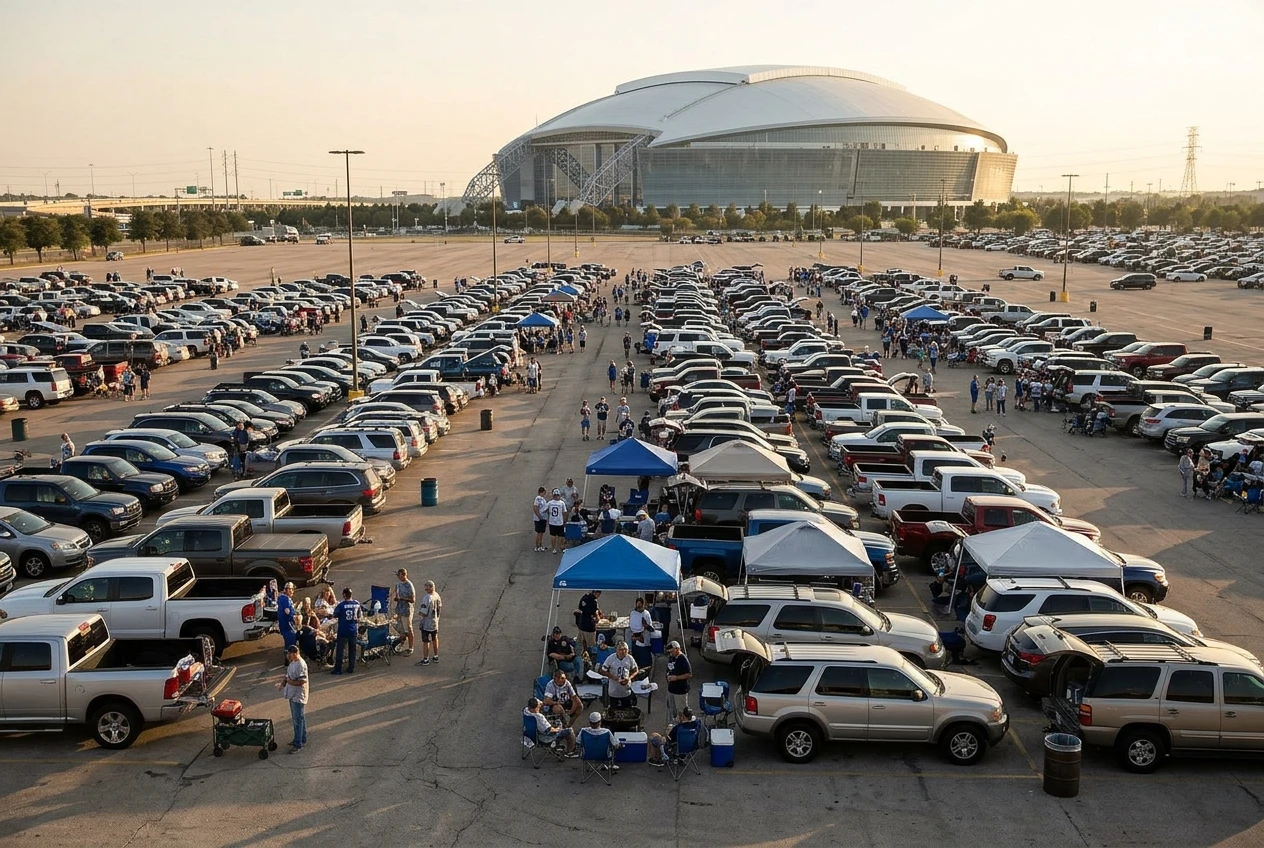
That has three practical effects:
- Parking is the center of your plan. Where you park decides how far you walk, how easy your exit is, and sometimes whether you can tailgate at all.
- Traffic is part of the event. Roads around the stadium fill up before kickoff and again after the final whistle.
- Official rules govern the lots. Whether a lot allows grills, tents or alcohol, and when it opens, is set by the venue and the team, not by tailgating custom.
If you have tailgated at another stadium, do not assume the same habits carry over. Each venue writes its own rules, and a setup that worked in one lot can be turned away at another. The post on tailgating at SoFi Stadium shows how much a venue’s policies can change what you can bring, and the same lesson applies here.
Get Your Parking Plan Sorted Before You Leave Home
Settle parking first, because everything else depends on it. A last-minute decision about where to leave your car is how first-timers end up in a long line of traffic with no clear destination.
Start with a few questions:
- Do you have a parking pass, or are you buying one? Check how passes are sold for your specific game and whether the lot you want is available.
- Which lot does the pass cover? Lots differ in location and in what they allow, so look at the lot map rather than assuming one pass equals one experience.
- Is tailgating permitted in that lot? Some parking areas are for parking only. Confirm that your lot allows the setup you have in mind.
- How many vehicles are in your group? If friends are arriving separately, find out whether you can park together or whether each car needs its own pass.
Buy parking through official channels. The Cowboys and the stadium publish parking information, and the team’s ticketing partners handle official sales. Resale listings for parking exist, but you should be certain a pass is valid for your game and your lot before you pay for one.
Save your pass and the lot map on your phone before you leave. Cell service around a full stadium can be slow, and you do not want to be waiting on a page to load while a lot attendant waits for your pass.
What to Confirm With Official Sources Before Game Day
This is the part of the guide that matters most. Rules for stadium lots are specific and change over time, and the only reliable source is the venue itself. Check the official Dallas Cowboys website and the AT&T Stadium website, and look at the game-day information for your particular matchup.
Here is what to verify and why each item matters.
Lot rules and tailgating policies
Find out which lots allow tailgating, what the space limits are for each vehicle, and whether tents, canopies or tables are permitted. Lot policies can differ by lot and by event, so read the page for your game rather than a general one.
Grill and cooking policies
If you plan to cook, confirm whether grills are allowed in your lot and what types are accepted. Charcoal, propane and electric are often treated differently, and policies on fuel and open flame can be specific. Check this before you buy gear. If you are still choosing, the portable grills for tailgating post covers what to look for, and you can compare it with the venue’s policy.
Alcohol policies
Rules on alcohol in parking lots, and on bringing it into the stadium, are set by the venue and by local law. Read the official policy and follow it. The same goes for glass containers, which many venues restrict.
Gate times and the stadium bag policy
Find the time lots open and the time gates open for your game. Check the stadium’s bag policy too, because it decides what you can carry from the lot into the building. Anything that does not meet it has to stay in your vehicle.
Transportation and traffic information
Look for official guidance on shuttles, rideshare drop-off and pick-up areas, and road closures on game day. If you are staying in a hotel, ask the front desk whether there is a shuttle option for the game.
Write down the answers you find, with the date you checked. Policies can be updated close to game day, so check again a day or two before you travel.
Timing Your Day: Arrival, Setup and the Walk to the Gates
A tailgate has a limited window. It starts when your lot opens and ends when you need to walk to the gates, and the time in between goes quickly if you arrive late.
Arrival. Aim to reach the area well before your lot opens if you want a choice of spots. Traffic into Arlington builds as kickoff approaches, so the later you arrive, the slower the last mile becomes. If you are driving from Dallas or Fort Worth, allow extra time for the final approach to the lots, not just the highway.
Setup. Park, then set up in the order you will need things. Put up shade first if canopies are allowed, because Texas sun makes a lot of pavement uncomfortable even in the cooler months. Next set out your cooler and food, and start cooking last, so nothing sits out while you are still arranging chairs.

The walk. Look at the map and estimate how far your lot is from your gate. Large lots mean long walks, and you will be walking with a crowd. Plan to start toward the gates earlier than you think you need to, because security lines build as kickoff nears. Missing kickoff after hours of preparation is a disappointing way to end a tailgate.
Pick a firm departure time for your group and tell everyone. A shared time stops the slow drift of people finishing one more plate of food while the line at the gate grows.
Packing for a Stadium Lot: What to Bring and What to Leave in the Car
Stadium lots are hard pavement with little shade. Pack for that surface and for the walk to the gate.
Bring to the lot:
- A cooler for food and drinks, packed so perishables stay cold. The cooler packing tips post explains how to layer ice and food.
- Folding chairs and a table, if your lot permits them.
- Shade, if canopies are allowed in your lot.
- Trash bags, paper towels and wipes, so your spot is clean when you leave.
- Sunscreen, water and hats.
- Your parking pass, tickets and ID, kept where you can reach them.
Take into the stadium only what the bag policy allows. That usually means a small amount: tickets, phone, wallet and a few essentials in an approved bag. Read the current policy and pack to it.
Leave in the car:
- Coolers, grills and anything bulky.
- Extra bags that do not meet the bag policy.
- Valuables you do not need. Out of sight is better than on the seat.
Weather matters more than most visitors expect, and a game in September can feel nothing like one in December. If you are traveling for a game when conditions could be extreme, the tailgating gear for extreme weather guide may help you decide what to add.
Food and Drink That Suit a Texas Parking Lot
Hot pavement and direct sun make food safety a real consideration. Perishable food should not sit out for more than two hours, according to USDA food safety guidance, and that window shrinks to one hour when the temperature is above 90°F. Cold food should stay at 40°F or below, and hot food should stay at 140°F or above.
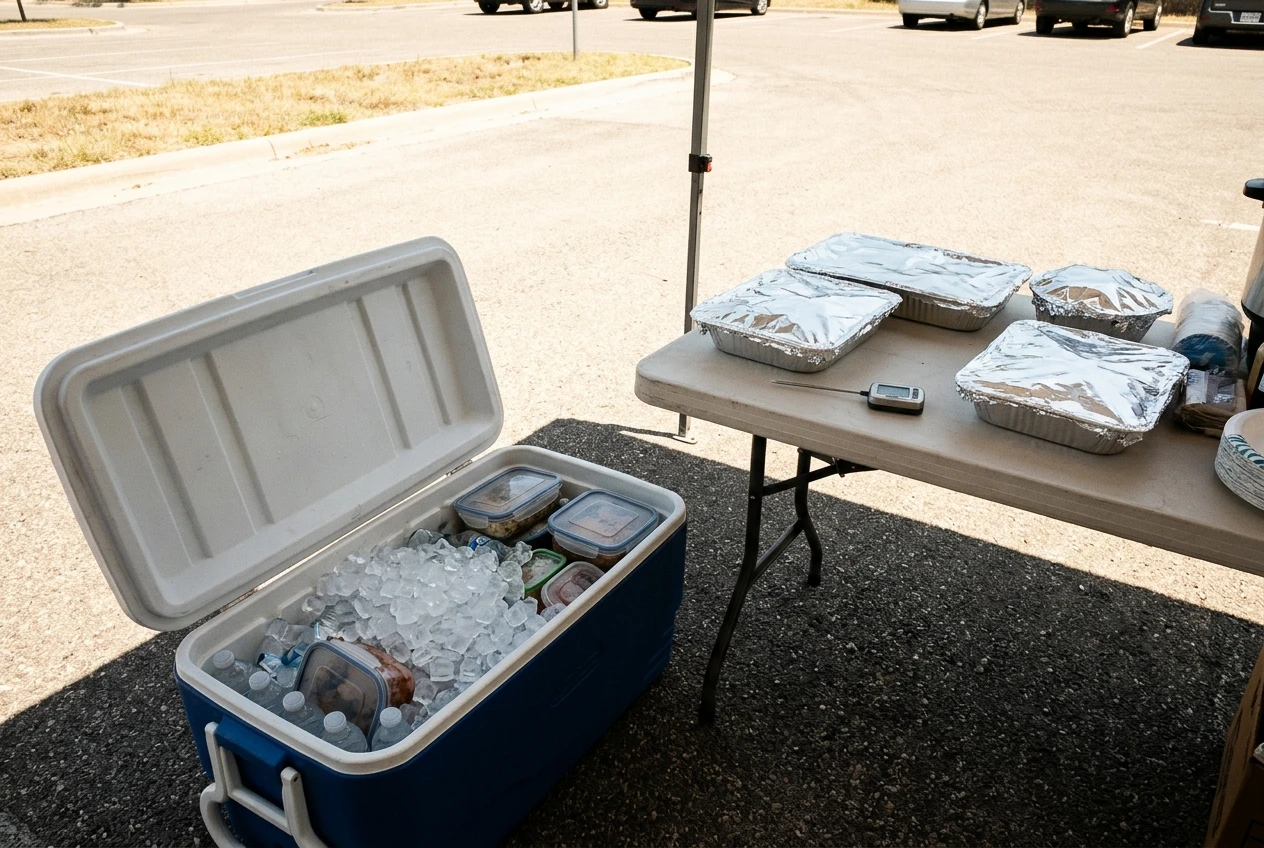
That guidance points to a few practical choices:
- Keep raw meat in its own cooler, or at least in sealed containers at the bottom of one, away from ready-to-eat food.
- Bring more ice than you think you need, and keep the cooler in shade with the lid closed between uses.
- Pick food that tolerates heat. Items that hold up well outdoors are easier to manage than anything that needs constant refrigeration.
- Bring water alongside everything else. Drink it throughout the day, particularly if you are in the sun for hours before the game.
- Use a food thermometer for anything you cook, so you are not guessing at doneness.
For ideas that work well in a lot, the best tailgating snacks post is a good place to start. Whatever you cook, confirm your lot’s grill policy first, and have a plan for how you will dispose of hot coals or used fuel if you are permitted to use them.
Getting Out Afterward: Leaving the Lot Without Losing an Hour
Almost every first-timer underestimates the exit. Tens of thousands of people leave at the same time, and the roads out of the lots can back up well after the game ends.
A few approaches help:
- Know your exit route before the game. Look at the map when you arrive and note which roads lead out of your lot and toward your destination.
- Pack up before you go in, where you can. If you tidy your spot before walking to the gates, you will have less to do when you come back.
- Decide in advance whether to leave right away or wait. Some groups stay in the lot after the game to let traffic clear, and others leave early to beat it. Either works if you plan for it. Make sure the lot allows you to stay, and check for any rules on when lots close or clear out.
- Do not drink and drive. Name a driver before the day starts, or arrange a rideshare or shuttle ride. Rideshare pick-up areas can be crowded after games, so check the official guidance on where they are.
- Leave the lot clean. Bag your trash and take it with you or use the provided containers.
If you are driving a long distance afterward, a hotel nearby may be less stressful than a late-night drive home.
A First-Timer’s Game Day Checklist
Use this list as a final check on the day before and the morning of the game.
The day before:
- Confirm your parking pass, lot location and tailgating policy on the official sites.
- Check the grill, alcohol and bag policies again for any updates.
- Look up lot opening and gate opening times.
- Check the weather forecast and adjust what you pack.
- Pack the cooler and ice, and decide who is driving.
The morning of:
- Save your pass, tickets and lot map on your phone.
- Load the car so the cooler and setup gear are easy to unload first.
- Leave with enough time to deal with traffic near the stadium.
In the lot:
- Set up shade and seating first, then food.
- Keep perishables cold and check cooking temperatures.
- Agree on a departure time for the walk to the gates.
- Put anything that fails the bag policy back in the car.
After the game:
- Know your exit route and your plan for the wait.
- Clean your spot and take your trash.
- Confirm who is driving before anyone gets in the car.
Pair this with the Road Trip Essentials Checklist and the Top 10 Essential Tailgating Supplies For Beginners so your trip and your setup are both covered before kickoff.